by Giovanni Batz
When language is denied, families are torn apart—Margarita’s case exposes how the absence of Indigenous language interpretation fuels unjust separation and threatens family unity.
(Español abajo)
The November 4, 2025, arrest and the possible deportation of Margarita Asicona Avilés, a 38-year-old Maya Ixil woman from Chajul, Guatemala, due to the lack of an Ixil Maya interpreter for their court hearings is illustrative of the continuing and worsening of the violation of migrant and indigenous rights, and the need for language justice. Margarita was arrested in Homestead, Florida by police officers for child neglect after her two-year-old daughter was playing outside their apartment while she was at work, and who was being watched by their ten-year-old son. After her arrest, she was not provided an Ixil Maya interpreter to explain why she was detained and separated from her children. In addition to facing criminal charges and the threat of deportation, Margarita may lose custody of her children who are currently in custody at the Florida Department of Children and Families.
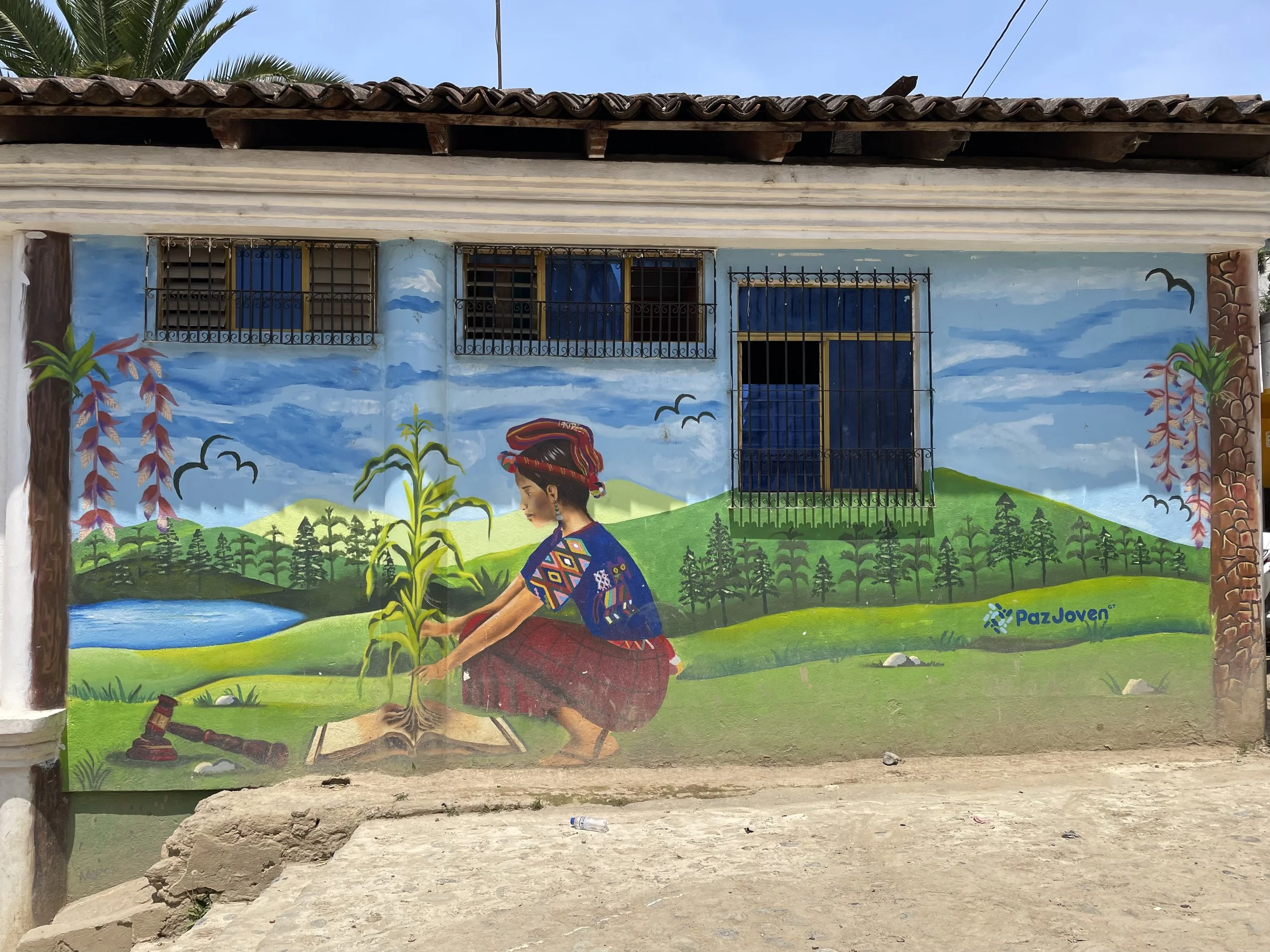
Mural in Chajul. Photo Credits: Giovanni Batz
Margarita’s case demonstrates several issues, such as the need for interpreters for Indigenous Peoples and for childcare, especially for migrant parents and caregivers, as well as the erasure of the presence of Indigenous Peoples and migrants in media and the legal system. The case also highlights the precarious situations that US-born Maya children confront when their parents or caregivers are detained or arrested.
The marginalization of Indigenous migrants in the US and their lack to interpreters is a long-standing and historical problem and a continuation and violation of their due process and access to a fair trial. Within the immigration system, the Department of Homeland Security’s Office for Civil Rights and Civil Liberties published the Indigenous Languages Plan in February 2024 and recognized the need to provide language services to Indigenous Peoples, particularly from Latin America. Under Executive Order 13166 Improving Access to Services for Persons with Limited English Proficiency, the DHS is required to “provide meaningful access to its programs, services, and activities to persons” who are limited in English proficiency. The DHS reports that Customs and Border Protection (CBP), Federal Emergency Management Agency (FEMA), Immigration and Customs Enforcement (ICE), and Citizenship and Immigration Services (USCIS), encountered indigenous languages such as K’iche’, Mam, Quechua, Mixtec, Zapotec, Q’eqchi, Chuj, Garifuna, Tzotzil, Triqui, Pocomchi, Poqomam, Nahuatl, Miskito, Ixil, among others. Despite this recognition by US agencies, the lack of interpreters and disregard for Indigenous identities remains a persistent problem, and migrants from Latin America are erroneously perceived to be all Spanish speakers.
Indigenous and migrant based community organizations such as the International Mayan League, CIELO, and Comunidad Sol have advocated and struggled for language justice for Indigenous Peoples in the US. Comunidad Sol, an organization created and led by displaced Maya youth and women migrants in Ohio, is consisted of Maya Peoples that include K’iche’, Ixil, Awakateko and Mam, and have been accompanying Margarita after they were called for support. Other organizations such as the Ohio Immigrant Alliance have joined in trying to raise awareness on this situation. On November 11, 2025, Comunidad Sol sent a letter to the Guatemalan Consulate in Florida and requested that they coordinate with the US authorities to ensure that interpreters are provided to Margarita.
Geronimo Ramirez, who is Ixil Maya and Executive Director of Comunidad Sol, states that often, Maya identity is not considered in government agencies, the media, or the courts. This can lead to several assumptions that can be harmful to Indigenous peoples and migrants, particularly when they are defending their rights. He explains, “Many times when they do not recognize our identity as Mayas, as Indigenous Peoples, they think that our language is a dialect, or they think that our language is a variant of Spanish, so there is no importance given to our identity and our languages.” For instance, a Telemundo news report on Margarita’s case portrays a scene in which Margarita is visibly concerned and confused during a hearing with a judge who is asking her questions and describing the charges she is facing. An English to Spanish interpreter is heard translating and asking Margarita questions to which she does not respond given that she does not speak Spanish. The news story states that she did not understand Spanish and the judged ordered a new hearing date. During the coverage, the reporter does not mention that she is a Maya woman, and instead says she is from Guatemala and speaks a “Guatemalan indigenous dialect.”
Geronimo has been in communication with Margarita and her family. Her case, he observes, underlines the disregard and invisibilization of her Maya identity, which is a violation of her human rights, including her right to access an interpreter. Geronimo states, “What she expresses is that she is not understanding the process, she did not have access to an interpreter, even though there are several organizations that provide interpretations.” He further highlights that Margarita is a Maya woman who is the daughter of genocide survivors who “did not just migrate, but was forced to migrate, because of poverty, which is only a consequence of invasion, genocide, war… that forced migration has its roots.” Comunidad Sol, through its interpreters, accompanies the family in Guatemala and the United States, having a community-based accompaniment process that is respectful and strives to not re-victimize the family member and Margarita.
In speaking with Margarita’s mother who lives in Guatemala on the phone through an Ixil interpreter, the negative impacts that her detention and legal situation have had are evident through the unavailability of communication. Margarita’s mother tells me, “To this day, since Margarita was arrested, I haven’t had any access to her, I haven’t been able to talk to her… I only know that she was arrested, I know that she was in a detention center, but honestly, I don’t know if she’s okay, if she’s eating well, if she was mistreated, if they did anything to her inside the center, so honestly, I haven’t had any communication with her.” She adds that Margarita left Guatemala due to poverty and the legacies of the war, and that her daughter needs to have access to an interpreter since “she needs to know why she was arrested, and also to know her rights.” Lastly, Margarita’s mother emphasizes the vital role that community organizations like Comunidad Sol have in advocating and providing services to the migrants in the US.
Margarita continues to be detained, separated from her children and is facing deportation. Her children, in turn, are without their mother. Community organizations like Comunidad Sol advocate for Indigenous Peoples and the need for interpreters. All authorities involved should ensure that Margarita has a right to an interpreter and due process and ensure that she is allowed to see her children.
About the author
Giovanni Batz is Assistant Professor in the department of Chicana and Chicano Studies at the University of California, Santa Barbara. He is author of the book The Fourth Invasion: Decolonizing Histories, Extractivism, and Maya Resistance in Guatemala (University of California Press, 2024).
Justicia Lingüística para Margarita: Una mujer maya ixil arrestada y en riesgo de deportación en Florida
by Giovanni Batz
Cuando se niega el derecho a utilizar la propia lengua, las familias se desintegran; el caso de Margarita ilustra cómo la falta de interpretación en lenguas indígenas da lugar a separaciones injustas y amenaza la unidad familiar.
El arresto y la posible deportación de Margarita Asicona Avilés, una mujer maya ixil de 38 años de Chajul, Guatemala, el 4 de noviembre de 2025, debido a la falta de un intérprete maya ixil para sus audiencias judiciales, ilustra la persistencia y el agravamiento de la violación de los derechos de los migrantes e indígenas, y la necesidad de justicia lingüística. Margarita fue arrestada en Homestead, Florida, por agentes de policía por negligencia infantil después de que su hija de dos años jugara fuera de su apartamento mientras ella trabajaba, bajo la vigilancia de su hijo de diez años. Tras su arresto, no se le proporcionó un intérprete maya ixil para que explicara por qué fue detenida y separada de sus hijos. Además de enfrentar cargos penales y la amenaza de deportación, Margarita podría perder la custodia de sus hijos, quienes actualmente se encuentran bajo custodia del Departamento de Niños y Familias de Florida.
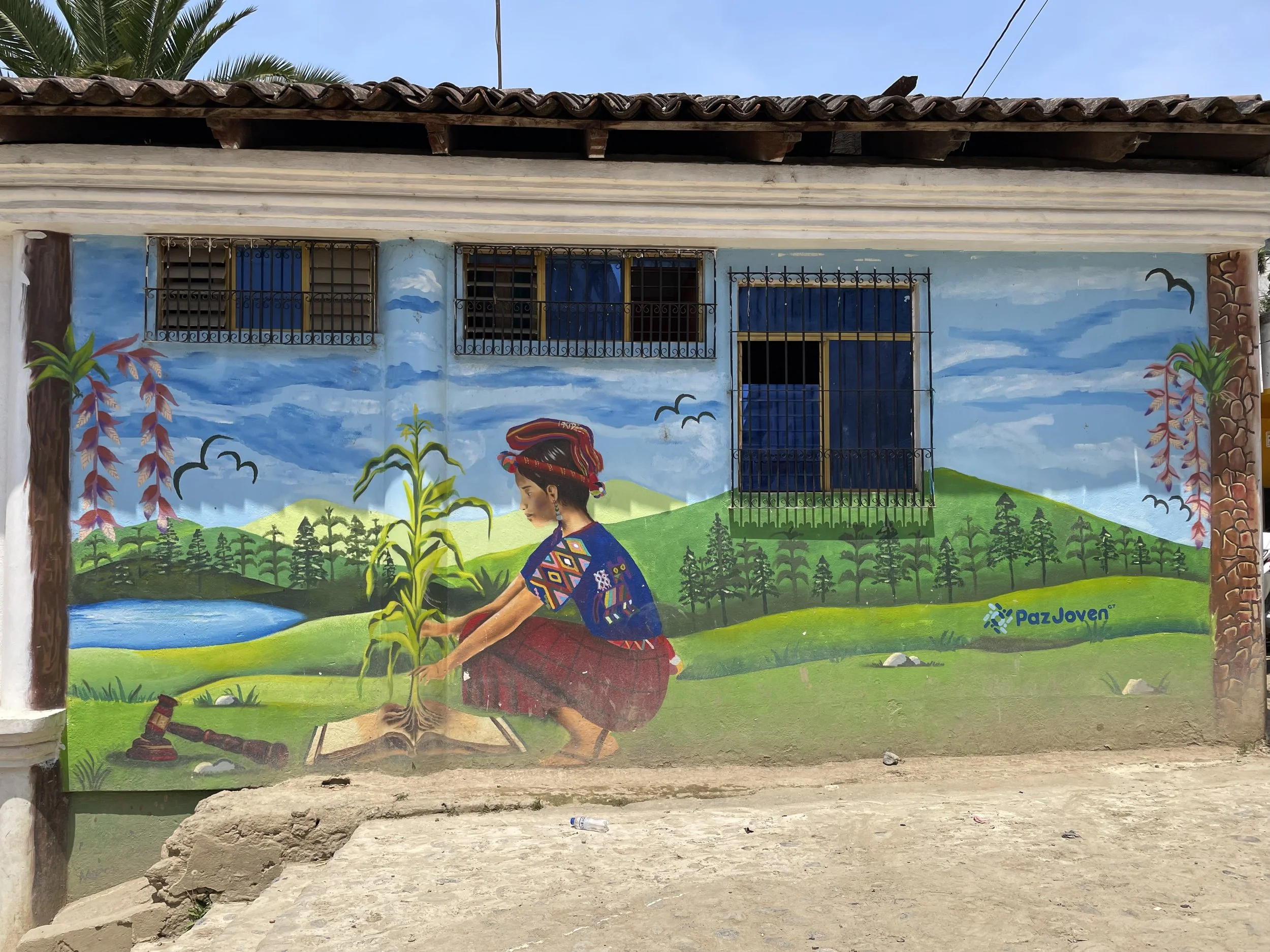
Mura en Chajul. Foto por Giovanni Batz
El caso de Margarita pone de manifiesto varios problemas, como la necesidad de intérpretes para los pueblos indígenas y el cuidado infantil, especialmente para los padres y cuidadores migrantes, así como la supresión de la presencia de los pueblos indígenas y migrantes en los medios de comunicación y el sistema judicial. El caso también pone de relieve la precaria situación que enfrentan los niños mayas nacidos en Estados Unidos cuando sus padres o cuidadores son detenidos o arrestados.
La marginación de los migrantes indígenas en Estados Unidos y la falta de intérpretes es un problema histórico de larga data, y una continuación y violación de su debido proceso y acceso a un juicio justo. Dentro del sistema de inmigración, la Oficina de Derechos Civiles y Libertades Civiles del Departamento de Seguridad Nacional publicó el Plan de Idiomas Indígenas en febrero de 2024 y reconoció la necesidad de brindar servicios lingüísticos a los pueblos indígenas, en particular a los de América Latina. En virtud de la Orden Ejecutiva 13166, Mejorando el acceso a los servicios para personas con dominio limitado del inglés, el DHS debe “proporcionar acceso significativo a sus programas, servicios y actividades a las personas” con dominio limitado del inglés. El DHS informa que la Oficina de Aduanas y Protección Fronteriza (CBP), la Agencia Federal para el Manejo de Emergencias (FEMA), el Servicio de Inmigración y Control de Aduanas (ICE) y el Servicio de Ciudadanía e Inmigración (USCIS) encontraron idiomas indígenas como el quiché, el mam, el quechua, el mixteco, el zapoteco, el q’eqchi, el chuj, el garífuna, el tzotzil, el triqui, el pocomchí, el poqomam, el náhuatl, el misquito y el ixil, entre otras. A pesar de este reconocimiento por parte de las agencias estadounidenses, la falta de intérpretes y el desprecio por las identidades indígenas siguen siendo un problema persistente, y se percibe erróneamente que todos los migrantes latinoamericanos son hispanohablantes.
Organizaciones comunitarias indígenas y migrantes, como La Liga Maya Internacional, CIELO y Comunidad Sol, han abogado y luchado por la justicia lingüística para los pueblos indígenas en Estados Unidos. Comunidad Sol, una organización creada y liderada por jóvenes y mujeres migrantes mayas desplazadas en Ohio, está compuesta por pueblos mayas como k’iche’, ixil, awakateko y mam, y ha acompañado a Margarita tras recibir una llamada de apoyo. Otras organizaciones, como la Alianza de Inmigrantes de Ohio, se han unido para visibilizar esta situación. El 11 de noviembre de 2025, Comunidad Sol envió una carta al Consulado de Guatemala en Florida solicitando que coordinaran con las autoridades estadounidenses para garantizar que se proporcionaran intérpretes a Margarita.
Gerónimo Ramírez, maya ixil y director ejecutivo de Comunidad Sol, afirma que, a menudo, la identidad maya no se considera en las agencias gubernamentales, los medios de comunicación ni los tribunales. Esto puede generar diversas suposiciones perjudiciales para los pueblos indígenas y los migrantes, especialmente cuando defienden sus derechos. Explica: “Muchas veces cuando no reconocen nuestra identidad como Mayas, como pueblos indígenas, pues piensan que Nuestro idioma es un dialecto, o piensan que nuestro idioma es una variante de español, entonces no hay importancia sobre nuestra identidad y nuestros idiomas”. Por ejemplo, un reportaje de Telemundo sobre el caso de Margarita muestra una escena en la que Margarita se muestra visiblemente preocupada y confundida durante una audiencia con un juez que le hace preguntas y describe los cargos que enfrenta. Se escucha a un intérprete de inglés a español traduciendo y haciéndole preguntas a Margarita, a las que no responde debido a que no habla español. La noticia afirma que no entendía español y el juez ordenó una nueva fecha de audiencia. Durante la cobertura, el reportero no menciona que es una mujer maya, sino que dice que es de Guatemala y habla un “dialecto indígena guatemalteco”.
Gerónimo se ha comunicado con Margarita y su familia. Observa que su caso subraya el desprecio y la invisibilización de su identidad maya, lo cual constituye una violación de sus derechos humanos, incluido su derecho a un intérprete. Gerónimo afirma: “lo que ella expresa de que no está entendiendo el proceso, no tuvo acceso a un intérprete, aunque hay varias organizaciones que proveen interpretaciones”. Además, destaca que Margarita es una mujer maya, hija de sobrevivientes del genocidio, que “y que no migro, sino fue forzada para migrar, por la pobreza que solo son consecuencias de la invasión, del genocidio, de la Guerra… que migrar forzadamente tiene sus raíces”. Comunidad Sol, a través de sus intérpretes, acompaña a la familia en Guatemala y Estados Unidos, mediante un proceso de acompañamiento comunitario respetuoso que busca evitar la revictimización de Margarita y su familia.
Al hablar por teléfono con la madre de Margarita, quien vive en Guatemala, a través de una intérprete de ixil, se hacen evidentes los impactos negativos que su detención y situación legal han tenido, debido a la falta de comunicación. La madre de Margarita me dice: “hasta hoy en fecha desde que Margarita la detuvieron, no he tenido acceso con ella, no he podido hablar con ella, no sé acerca del caso, solo sé que la detuvieron, sé que estuvo en un centro preventivo, pero así honestamente, no sé perfectamente si está bien, si come bien, si la maltrataron, si le hicieron algo dentro del centro, así honestamente no he tenido comunicación con ella”. Añade que Margarita salió de Guatemala debido a la pobreza y las consecuencias de la guerra, y que su hija necesita tener acceso a un intérprete, ya que “necesita saber por qué fue detenida, y también conocer sus derechos”. Finalmente, la madre de Margarita enfatiza el papel vital que desempeñan organizaciones comunitarias como Comunidad Sol en la defensa y la prestación de servicios a los migrantes en Estados Unidos.
Margarita continúa detenida, separada de sus hijos y enfrenta la deportación. Sus hijos, a su vez, están sin su madre. Organizaciones comunitarias como Comunidad Sol abogan por los pueblos indígenas y la necesidad de intérpretes. Todas las autoridades involucradas deben garantizar que Margarita tenga derecho a un intérprete y al debido proceso, y que se le permita ver a sus hijos.
Sobre el autor
Giovanni Batz es profesor asistente en el departamento de Estudios Chicanas y Chicanos de la Universidad de California, Santa Bárbara. Es autor del libro The Fourth Invasion: Decolonizing Histories, Extractivism, and Maya Resistance in Guatemala (University of California Press, 2024).